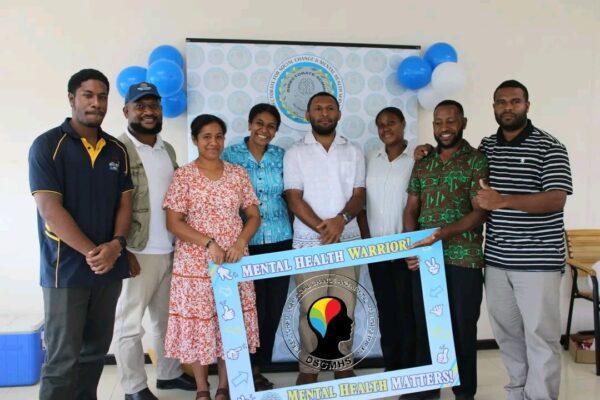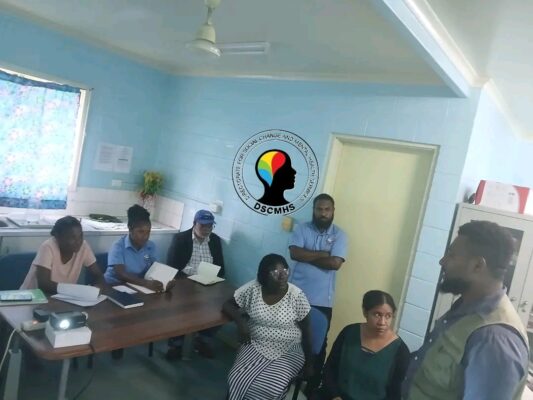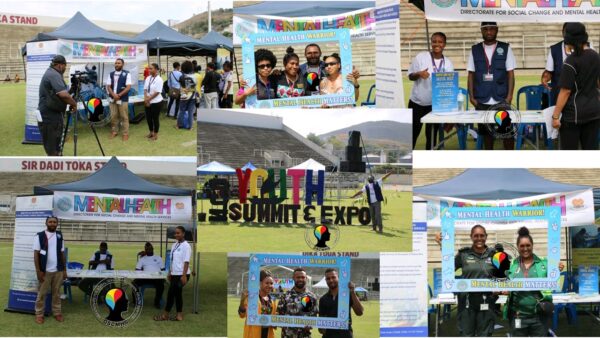
On World Mental Health Day 2024, the Directorate for Social Change and Mental Health Services (DSCMHS) joined the global community in championing the theme chosen by the World Federation for Mental Health: “It is Time to Prioritize Mental Health in the Workplace.” This theme recognizes that adults spend most of their waking hours at work, making workplaces critical environments for mental health promotion – or harm. With depression and anxiety disorders costing the global economy an estimated $1 trillion annually in lost productivity (WHO), the need for action has never been more urgent. The COVID‑19 pandemic further exposed gaps in workplace mental health support, especially as hybrid and home‑based work became common.
DSCMHS, in partnership with global bodies such as the World Health Organization (WHO) and the United Nations, is actively advocating for policies that create healthier, more inclusive work environments in Papua New Guinea. This report expands on the theme, presents the economic and human arguments for prioritising workplace mental health, and outlines how PNG organisations – from government departments to private businesses and NGOs – can take practical steps. The Directorate expresses profound gratitude to all global citizens who helped celebrate this year’s campaign.
Core message: It is time to prioritise mental health in the workplace – for the wellbeing of workers and the productivity of nations.
1. Background: Why Workplace Mental Health Matters
1.1 The Global Context
Mental health conditions are among the leading causes of disability worldwide. According to the World Health Organization:
· Depression and anxiety alone cost the global economy US$1 trillion per year in lost productivity.
· 12 billion working days are lost annually to depression and anxiety.
· For every US$1 invested in scaling up treatment for common mental disorders, there is a **return of US$4** in improved health and productivity.
Despite these figures, mental health remains severely underfunded and stigmatised in most workplaces.
1.2 The PNG Situation
In Papua New Guinea, formal and informal workers face unique pressures:
· High workloads with limited staff
· Lack of employee assistance programs
· Cultural stigma around admitting psychological distress
· Post‑pandemic economic stress affecting job security
· Limited access to counselling services, especially outside urban centres
DSCMHS recognises that a healthy workforce is essential for national development. Without mental health support, PNG risks lower productivity, higher staff turnover, and increased workplace accidents.
1.3 The COVID‑19 Legacy
The pandemic intensified workplace mental health challenges: remote work blurred boundaries between home and office; frontline workers (health, emergency, retail) faced burnout; and many lost jobs or experienced income instability. The lesson is clear: workplaces must be redesigned with mental health as a core pillar, not an afterthought.
2. The 2024 Theme: “It is Time to Prioritize Mental Health in the Workplace”
2.1 What the Theme Means
This year’s theme, chosen by the World Federation for Mental Health, calls for:
· Awareness – recognising that mental health is as important as physical safety.
· Action – implementing policies, training, and resources.
· Accountability – holding employers and governments responsible for creating supportive work environments.
“With adults spending most of their waking hours at work, it’s essential that workplaces promote mental health, rather than harm it.”
2.2 Why Now?
· Economic case: Untreated mental health conditions drain productivity.
· Human rights case: Everyone deserves a psychologically safe workplace.
· Post‑pandemic recovery: Many workers are still struggling with anxiety, grief, and burnout.
· Young workforce expectations: Millennials and Gen Z prioritise mental health support when choosing employers.
3. Key Workplace Mental Health Issues
The Directorate identifies four priority areas for intervention in PNG workplaces:
Issue Description Impact
Stress management Chronic high demands, long hours, lack of control over work Burnout, absenteeism, physical illness
Social inclusion Discrimination based on mental health status, gender, or disability Isolation, reduced teamwork, higher turnover
Supportive policies Absence of mental health leave, flexible hours, or employee assistance programs Employees hide symptoms; small issues become crises
Stigma Fear of being seen as “weak” or “unreliable” if seeking help Delayed treatment, worsening conditions, suicides
The solution: Workplaces that intentionally address these issues see measurable improvements in morale, productivity, and retention.
4. The Role of DSCMHS: Collaboration for Change
4.1 Global Partnerships
DSCMHS is collaborating with global organisations including:
· World Health Organization (WHO) – Aligning with WHO’s Mental Health Gap Action Programme (mhGAP) for workplace guidelines.
· United Nations – Contributing to Sustainable Development Goal 3 (Good Health and Wellbeing) and Goal 8 (Decent Work).
· World Federation for Mental Health – Disseminating campaign materials in PNG.
4.2 National Advocacy
Within Papua New Guinea, DSCMHS is working to influence:
· National employment policies to include mental health provisions.
· Public service wellness programmes for government workers.
· Private sector engagement through business councils and chambers of commerce.
“DSCMHS, in partnership with organizations like the WHO and United Nations, seeks to influence policies that promote mental health and global citizenship.”
4.3 Direct Services
The Directorate offers free, confidential mental health services to workers, including:
· On‑site workplace awareness sessions
· Stress and anger management workshops
· Referral pathways for counselling
· Training for managers and HR staff
5. Evidence: What Works in the Workplace
Research consistently shows that supportive work environments produce positive outcomes:
Intervention Proven Benefit
Flexible work hours Reduced burnout, better work‑life balance
Mental health training for managers Early identification of struggling employees; reduced stigma
Employee assistance programs (EAPs) Lower absenteeism; faster return to work
Peer support networks Increased help‑seeking; stronger team cohesion
Reasonable accommodations (e.g., quiet rooms, adjusted targets) Improved performance of workers with mental health conditions
“Employers are encouraged to provide accommodations, flexible work hours, and access to mental health resources. Training for managers to recognize and address mental health concerns can also create a culture of support and care.”
6. Global Shift: The Post‑Pandemic Workplace
The pandemic accelerated changes in how and where we work. Many jobs have shifted to home environments or hybrid models. While this offers flexibility, it also introduces new challenges:
· Loneliness and isolation
· Difficulty “switching off” from work
· Digital monitoring and pressure
· Lack of separation between home and office stressors
Globally, there is an urgent need to make workplaces – whether physical, remote, or hybrid – healthier and more inclusive. Mental health cannot be an afterthought in policy design.
“Globally, there’s an urgent need to make workplaces healthier and more inclusive, especially as many jobs have shifted to home environments post‑pandemic.”
7. Recommendations for PNG Workplaces
Based on the 2024 theme and global best practices, DSCMHS recommends the following actions for all employers in Papua New Guinea:
For Small / Medium Enterprises For Large Corporations & Government
Designate a mental health contact person Establish a formal Employee Assistance Program (EAP)
Allow flexible start/finish times when possible Train all managers in Mental Health First Aid
Provide a private space for staff to rest or decompress Conduct anonymous staff wellbeing surveys annually
Display mental health helpline posters Include mental health coverage in health insurance
All employers can:
· Start conversations about mental health without judgment.
· Recognise that stress leave is as legitimate as sick leave.
· Partner with DSCMHS for free awareness sessions.
8. DSCMHS Celebration: Gratitude to Global Citizens
The Directorate is deeply grateful to the many individuals and organisations that helped celebrate this year’s global campaign theme in Papua New Guinea. These “global citizens” include:
· Workplace champions – employees who shared their stories to reduce stigma.
· Business leaders – who committed to piloting mental health policies.
· NGO partners – who distributed awareness materials in settlements and remote areas.
· International allies – including WHO, UN, and the World Federation for Mental Health.
“I am incredibly grateful to the global citizens that have helped DSCMHS in celebrating this year’s global campaign theme.”
Together, we are building a movement where no worker has to suffer in silence.
9. Call to Action for World Mental Health Day 2024 and Beyond
To every employer in Papua New Guinea:
Today is the day to act. You do not need a large budget – you need a commitment. Start with one conversation, one policy change, one training session.
To every worker:
Your mental health matters. You are not weak for struggling. Seek help – from a trusted colleague, a peer, or DSCMHS. We are here for you, free and confidential.
To all global citizens:
Keep advocating. Keep sharing. The workplace of the future must be mentally healthy for all.
“This World Mental Health Day, let’s come together to champion mental health at work.”
10. Conclusion
World Mental Health Day 2024 marks a turning point. The theme “It is Time to Prioritize Mental Health in the Workplace” is not a slogan – it is an urgent call to action. With US$1 trillion in annual productivity losses, rising burnout, and the lingering effects of COVID‑19, no organisation can afford to ignore mental health.
The Directorate for Social Change and Mental Health Services remains committed to advocating for supportive workplace policies, providing free services, and partnering with global bodies like WHO and the United Nations. Together, we can create workplaces where employees thrive – not just survive.
Remember: A healthy workplace benefits everyone – the worker, the organisation, and the nation.
Picture Insertion Guide for Website
To make this report visually engaging and suitable for online publication, insert 6 pictures as described below. The images should reflect workplace mental health themes and DSCMHS activities.
Picture # Type of Picture Specific Content Placement in Report
1 Hero / campaign banner A graphic or photo of the World Mental Health Day 2024 banner with the theme: “It is Time to Prioritize Mental Health in the Workplace” – include DSCMHS and World Federation for Mental Health logos. Top of report, above Executive Summary.
2 Workplace group photo A diverse group of employees in a PNG office or outdoor setting (e.g., government office, private company, NGO) – smiling, relaxed, possibly wearing mental health pins or holding signs. After Section 1 (Background).
3 Training / workshop action shot DSCMHS facilitator leading a stress management session with workers – whiteboard or flipchart visible, participants engaged. Within Section 4 (Role of DSCMHS) or Section 7 (Recommendations).
4 Infographic – economic cost A simple infographic showing “$1 trillion annual loss due to depression & anxiety” and “$4 return for every $1 invested in mental health.” Use icons (money, brain, chart). Within Section 1.1 or Section 2.2.
5 Global collaboration image A photo of DSCMHS representatives with WHO or UN officials (could be a meeting, workshop, or virtual screenshot) – or a symbolic image of PNG and global flags together. Within Section 4.1 (Global Partnerships).
6 Call‑to‑action / helpline poster A clean, readable graphic listing DSCMHS free services: counselling helpline, email, office address – with the message “Your mental health at work matters – reach out today.”